Friday, March 13, 2020

Bruce trail End to End Fundraiser and hike information

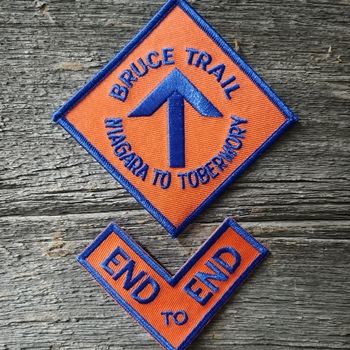
Bruce Trail End-to-End Badge


Bruce Trail E2E 2020

We're hiking the entire Bruce Trail in 2020 AND raising money for the future of the Bruce Trail.
This event is being hosted by three Bruce Trail Club hike leaders:
  • Ruth Moffatt – Niagara & Iroquoia Bruce Trail Clubs
  • Jacqueline VanDyke – Toronto Bruce Trail Club
  • Sandra Green – Caledon Hills Bruce Trail Club
17 participants are invited to join us as we hike the Bruce Trail in 3 stages, from south to north:
  • March 14-27, 2020
  • April 14-27, 2020 and
  • May 2-15, 2020
We'll hike approximately 20-25 km each day to complete the 900+km trail.
Link for my fundraising page:

Guest Hikers
If one of your sponsors would like to join us on a hike or a section of trail, we feel that a donation of $20 per day would be acceptable. If they’ve already sponsored you for this amount or more then they are good to go. Please let them know that they will need to sign the waiver and they need to let you, and I, know in advance. They will need to keep pace and to carry all the mandatory things in their back pack. Please provide them with the list that was previously provided to you.  If they want to join us for 3 or more days they will also go into the carpool rotation. 

What to bring and tips
Bruce Trail End to End 2020 - 
What to Bring & Tips & Useful Information 
Mandatory Items:  Backpack  At least 1.5-2.0 litres of water (more if it is a hot day and/or there will be a lot of hills)  Food/snacks (some hikers have a snack every hour but this is an individual thing)  Crampons or traction devices (often called icers)  Suitable footwear for rugged terrain and appropriate socks  Suitable clothing dependent on the forecasted weather – please check the forecast every day.  Medication/small first aid kit/tick remover(tweezers)/EpiPen if you require it  Whistle (Protocol: 1 blast: Attention, 2 blasts: Come here, 3 blasts: Emergency)  Health card/ID/Emergency Contact/Cash/Credit Card  Map of the Bruce Trail or Bruce Trail App – these are helpful to find the designated route/parking/distances etc.  Plastic bag for muddy boots/gaiters/icers. You may also wish to bring extra socks and shoes to change into for the drive home at the end of the day. Optional items:  Poles if you use them (recommended)  Bug spray  Hand sanitizer/lip balm/over the counter medication  Kleenex  Hat/sunscreen/sunglasses  Closed cell foam seat cushion or pad  Tensor  Camera  Gaiters (because there will be mud…)  Cellphone 100% charged and extra charger if necessary. It’s a good idea to register Emergency contact details on your phone which can be accessed without a password.  Extra socks/extra shirt/rain gear regardless of the weather forecast. 

Tips: Different things work for different people. These tips are some of the things that have worked for many hikers but is in no way an exhaustive list.  Do not wear cotton anything (many people wear Merino wool or synthetics)  Leuko Tape works for many people who may get hot spots and also for preventing blisters  If you’re getting blisters, it’s possible you have the wrong socks  Size up when buying hiking boots and make sure your boots are broken-in  Stretch at the end of the day  Epson salt bath or an ice bath for sore muscles and feet  Rest, lots of rest and eat healthily Useful Information  https://www.mec.ca/en/explore/how-to-choose-hiking-boots-or-shoes  https://www.outdoors.org/articles/three-common-hiking-bootfails?utm_source=facebook&utm_medium=social-organic&utm_campaign=pubpacklist-2020&fbclid=IwAR2SkVjWV7- IOTwdPjijcVMxK1TiErR9V5nK4fGv7sPd6V_daHS_bIfV2lo  https://www.ontario.ca/page/lyme-disease

Bruce Trail Warm up Saturday March 7th

Hike at Hilton Falls side trails Saturday March 7th coordinated by Bruce Trail hike leader and our End to End fundraiser coordinator.

Hilton Falls March 7th, 2020
Beautiful day, sunny and about 5 C. Trail was super icy in many places so wore the icers/crampons the whole hike.

Good news for the coming weeks is that I hiked 20.8 k!! I will not say that it was easy, the part after half way brief lunch break had a challenging component where I had to focus on each step and some positive mental talk, but I got through it and loved every minute even the hard parts:-)

Learning: Stretch before the drive home... I could hardly climb out of the car when I got home, so grateful for the hot tub


Bee sting vs Cricket bat

"See, that's called perspective, Eli. A bee sting smarts like a bitch until someone clubs you with a cricket bat.”
Trent Dalton  

In this crazy making world perspective like this makes a lot of sense to me. 
I highly recommend the book by Trent Dalton "Boy Swallows Universe", lots more pearls in it plus a really great read.
Cheers
Jeanne

Fitting in paradox

“What I realized much later, paradoxically, is that by trying to fit in, I was strengthening the culture that made me feel like I didn’t fit in.”

Well this quote hit me like a ton of bricks!! As we go deeper into the onion I feel there is going to be infinite more paradoxes like this. 
Crap, it may not be good enough to just be weird and accept being the only one who thinks like me... there may be more to do to empower people to move beyond  "this is the way it is"  in our world. I just finished Melinda Gates book and it is an eye opener.  
Cheers
Jeanne

“Being yourself sounds like a saccharin prescription for how to make it in an aggressive culture but it's not as sweet as it sounds. It means not acting in a way that is false just to fit in. It's expressing your talent, values, and opinions in your style, defending your rights, and never sacrificing yourself respect. That is power.”

Thursday, February 27, 2020

Courage 2 ways

"Courage is what it takes to stand up and speak; courage is also what it takes to sit down and listen."

Winston Churchill


I was looking for a quote about Standing tall, as in having the courage to stand up for what you believe no matter how unpopular it is. When I read this quote from Winston Churchill I realized it goes deeper. Because our beliefs can get us stuck ... possibly because when we believe strongly we are right our ego grabs onto that and we end up defending our belief so much we stop hearing anything but our own voice and we get a little stubborn. (ha ha; I may have a little personal experience of doing this)

Sometimes Standing tall is more than being convinced that our belief it the absolute right place to stand. I think that we could do some deep digging on what we are standing tall about ... what is underneath it?? And what are the realities of those who are standing tall in opposition to us?? Is it possible that somewhere underneath all the posturing and words, the arguments and illustrations we use to affirm what we are convinced is right there are places where we are all have the same fears? We talk over each other, wouldn't it serve more to talk with each other? Does one side always have to be wrong for the other side to be right?

Maybe we could take a break from having to 'be right' and stand tall for listening deeply and start from there to work on solutions. 

Cheers
Jeanne


Thursday, February 20, 2020

Rambling today

The Status Quo can be an opportunity if every time we feel out of our comfort zone we look at our assumptions and what we believe to be the "way things are" and use our imaginations to see other ways things can be.
Like Harry Potter and other heroes! We can be ordinary people and still use our brain and imagination to not live an ordinary life. A life where we don't have to walk a rigid line and do what everyone else does and be and dress and talk like everyone else!! Wow, scary because would our friends still like us? would we still have job or money security?? would we become outcast, everyone laugh at us? will we be humiliated because the rest of our world thinks we are stupid?? is that okay?? How is it not okay?? Because every day that I live with these niggles in my head that I'm part of the sickness/epidemic and not part of the cure. Until I take action I am one of those people who is denying vaccinations and fighting tooth and nail to hang on to my old beliefs, comfort level because "I" will be okay... NOT okay "I" am withering more day by day into a shrivelled being inside a shell that is going through the motions of living.
I would rather be HURT i would rather be cold and in pain and die than keep shrivelling!!
Jump out of the pot into the fire before you boil little frog... the only hope is that we can leap through the heat and into a New World that we have not imagined or experienced before

"New Low" by Sarah Harmer
Couldn't find those lyrics yet ... being released tomorrow
But here are lyrics for
New Loneliness by Sarah Harmer
There is just one apple on the tree
It isn't like I hoped it'd be
Yesterday when there was still you
I looked and I swear that I saw two
Maybe a wandering white-tailed deer
Came in the night to make it even more clear
And left me just one, a Spartan no less
To remind me of my new loneliness
There is just one oar leaning against the wall
What of our plans for paddles in the Fall?
With the reeds grown high in a winding maze
We were to follow old waterways
Maybe a hovering dragonfly
Will rest on a cattail and wonder why
There is no clamoring at the shore
Of two in a canoe with each an oar
There is just one pillow on the bed
Where a solitary someone lays her head
Source: Musixmatch

Status Quo = Problem

"If people are telling you that they don't believe what you're doing, that means you're doing something out of their comfort zone. And generally, people don't want to be taken out of their comfort zone because it's outside of the status quo."
Whitney Wolfe Herd

I wonder about confrontation and how it can be resolved when all parties are positive that their's is the RIGHT way. What if both parties could step back and try to understand from the other person's perspective what and why they are doing what they are doing and the impact what each has on the other with respect that there is no absolute right and wrong and the stronger we defend the 'status quo' the more we put ourselves and our society in a box and defend what we don't like as well as what we do like. 
I think we need to think very deeply about how the 'status quo' and our assumptions are keeping us in a mental cage.
Happy Thursday:-)
Jeanne

"I'd rather be overly ambitious than completely complacent," said Wolfe Herd this fall. "I think that we all have a choice with how we spend the hours of our day."  

This is an interesting article about an inspirational person, check out the whole story at:

Bumble founder Whitney Wolfe Herd is used to bucking traditions.
When she launched the female-focused dating app in 2014, which requires women searching for heterosexual matches to make the first move, some were skeptical it would take off. But Wolfe Herd's vision — that the app actually would empower women to make their own choices, rather than burden them with it — caught on. Bumble has become a household name and has grown to include services beyond dating, including professional networking and finding new friends.
Last year, Wolfe Herd made a strategic decision to push Bumble into India, a risky move given that casual dating is a relatively new and urban phenomenon and that India has one of the highest rates of sexual violence in the world. Still, Wolfe Herd didn't shy away.
Whitney Wolfe Herd founded Bumble, a dating app where women make the first move in 2014. Now, she's CEO of the parent company MagicLab, which is valued at $3 billion and includes four apps: Bumble, Badoo, Chappy and Lumen. (Dina Litovsky for CNN)
"We need to go where we're needed the most," Wolfe Herd said in an interview with CNN Business in September. "The most traditional, the most misogynistic mindsets globally — those markets for us are completely wide-open prairies," she said, referring to the decision to launch in India. "Just because something is not as progressive as another place in the world doesn't mean there's not a desire for that."
Now, Wolfe Herd is preparing for one of her biggest challenges yet: Taking over the CEO seat of Bumble's parent company MagicLab four months after former owner Andrey Andreev was accused of racism and sexism, allegations that he has denied. Investment firm Blackstone bought the company from the Russian billionaire last month, in a deal that valued it at $3 billion.
    At just 30, Wolfe Herd sits at the helm of a dating empire that claims it has more than 500 million global users across its four apps: Bumble, Badoo, Chappy and Lumen. When she returns from maternity leave in the spring after having her first baby, she will continue forging ahead with Bumble's international expansion. On a broader scale, she plans to use her platform to advocate for legislation outlawing digital sexual harassment both domestically and internationally. On top of this, she'll also have to address the findings of a still-ongoing investigation into the culture at Badoo.

    An ongoing investigation

    Andreev and Wolfe Herd had been business partners since Bumble launched in 2014 in Austin, Texas. Wolfe Herd, who started her career at Tinder, initially wanted to create a women-focused social network; Andreev suggested creating a dating app with a similar vision. His company, Badoo, helped provide the infrastructure, and he became her primary backer.
    The most traditional, the most misogynistic mindsets globally — those markets for us are completely wide-open prairies."
    WHITNEY WOLFE HERD, CEO OF MAGICLAB
    In July, Forbes reported on allegations of a sexist and toxic culture at Badoo headquarters in London, citing interviews with 13 former employees. The report included claims — some of which date back to 2011 and 2012 — that Andreev made racist and sexist comments to staffers, as well as broader claims of a toxic work environment.
    The company initially slammed the report, but two days later, Andreev issued a statement at the time saying he was "shocked and saddened by the allegations," though he maintained that "many of the accusations are inaccurate."
    The allegations immediately put Wolfe Herd in a difficult spot. Andreev had been a longtime mentor and friend, but the allegations against him were serious and went against everything Bumble stood for. Would she stand by him? In the initial Forbes article, she did: She was described as standing "firmly behind" Andreev, who she said was "my family and one of my best friends."
    Wolfe Herd issued a statement after the article came out, saying she was "mortified by the allegations," and that she "learned of the majority of these allegations at the same time as the public." She added that although she had "never seen or heard" any of the behavior in question, "I would never challenge someone's feelings or experiences."
    Wolfe Herd is taking over the CEO seat of Bumble's parent company MagicLab after former owner Andrey Andreev (left) was accused of racism and sexism. An internal investigation is ongoing. (MagicLab Press Kit)
    Wolfe Herd is taking over the CEO seat of Bumble's parent company MagicLab after former owner Andrey Andreev (left) was accused of racism and sexism. An internal investigation is ongoing. (MagicLab Press Kit)
    Badoo hired a firm to conduct an outside investigation into the allegations in the Forbes article and committed to making those findings public and implementing the recommendations. The investigation is ongoing, but Andreev sold his majority stake in the company as part of the Blackstone deal in November.

    Taking leaps of faith in India

    Just a few months before Bumble launched in India last year, the Thomson Reuters Foundation surveyed more than 500 experts on women's issues, and concluded that India was the most dangerous country in the world for women due to factors like sexual violence against women and cultural traditions impacting women's safety. Wolfe Herd, however, saw an opportunity to empower women in the country. If successful, it would be a huge business win.
      While other US-based dating apps already existed in the region, including Tinder, Hinge and OkCupid, there was arguably more at stake for Bumble. The company's differentiating factor lies in empowering women to initiate contact. Would Bumble be putting its female users at risk?
      Bumble took new, local safety precautions, like the ability for women to only display a first initial, rather than a full name, in addition to global features such as photo verification.
      Wolfe Herd said the first initial feature is only available for women on the platform. "We need to hold people accountable. The less anonymity given to the other side of the table is actually a great way to reduce friction, harassment and abuse," she said.
      The Indian version of the app is available in both Hindi and Hinglish — a hybrid between Hindi and English that's popular — on iOS and Android.
      Bumble leaned on support from actress Priyanka Chopra, who was named an adviser and investor in the startup last October, and Chopra's manager, Anjula Acharia, also a Bumble investor and adviser, who has a history of helping artists like Lady Gaga launch in the country.

      Friday, February 14, 2020

      Live first - then think


      “We do not think ourselves into new ways of living, we live ourselves into new ways of thinking.”
      Richard Rohr  

      I've been thinking about this and getting bogged down trying to write something so this is my last try...
      I have faith that it is okay to not know a thing. Knowing gives the ego something to cling to and it get so loud defending what it knows that it can't hear anything else. Where I am most emphatic that I am right is where I can learn the most. And living is not about knowing, it is about learning and experiencing. That's what I want it to be about for me anyways... open to wonder, love and adventure
      Cheers
      Jeanne

      Richard Rohr
      Richard Rohr, O.F.M. (born 1943) is an American Franciscan friar ordained to the priesthood in the Roman Catholic Church in 1970. He is an known inspirational speaker and has published numerous recorded talks and books, including The Divine Dance: The Trinity and Your Transformation (with Mike Morrell), Yes, And...: Daily Meditations, Immortal Diamond: The Search for Our True Self, Falling Upward: A Spirituality for the Two Halves of Life, The Naked Now: Learning to See as the Mystics See, and Eager to Love: The Alternative Way of Francis of Assisi.  

      The Shit

      "If you wanna fly, you got to give up the shit that weighs you down," 
      Toni Morrison wrote in her novel Song of Solomon

      Happy Today ... now is always a good time to let go of the shit but it ain't always easy, sometimes we cling to the shit and sometimes it clings to us.
      So live a little more, love a little more, imagine a little more, dance a little more, sing a little more, create a little more, walk a little more, sleep a little more, cook a little more, read a little more, be goofier and shake it up:-)... or do something you are avoiding...or do something you are afraid to do... or take a really cold shower...
      or 
      ...  sit in the shit, wallow in it, feel it oozing all around you, nothing is wrong with the shit itself, but we need to be aware of how much it is sticking ... 
      Cheers
      Jeanne


      Toni Morrision


      The 100 best novels: No 89 – Song of Solomon by Toni Morrison (1977)

      The novel with which the Nobel prize-winning author established her name is a kaleidoscopic evocation of the African-American experience in the 20th century


      I first read Toni Morrison in 1977 when a proof copy of her novel, Song of Solomon, was on offer to the then-independent publisher, Chatto & Windus, for whom I was working as a young editor. Part of my background reading for this, her third book, involved discovering, and falling in love with, her debut, The Bluest Eye (1970), and its successor, Sula (1973). Since then, I have followed most of Morrison’s subsequent fiction, notably Beloved and Jazz, but I remain a diehard fan of the novel that established her name. From 1977 on, she only grew in stature as a contemporary writer of extraordinary power and vision, ultimately becoming, in 1993, the first African-American woman to win the Nobel prize for literature.

      Song of Solomon blazed that trail. It was the first book by a black American woman writer to be chosen as a main selection of the all-powerful Book of the Month Club, a recognition unknown to the black community since Richard Wright’s Native Son (1940).

      Song of Solomon takes off, and finally comes back to earth, with an exhilarating leap of danger. The idea of “fly” and “flight” (as an escape, or challenge) runs through the story of Macon “Milkman” Dead III, who gets his nickname from being breastfed into childhood by his dominant mother.

      “Who am I ?” is a central premise of many classic novels in this series, including David Copperfield (No 15) and The Adventures of Huckleberry Finn (No 23). From the arresting first scene of an insurance agent’s suicidal leap, to the closing pages, when Milkman hurls himself into the air against his best friend and nemesis, Guitar, the novel traces Milkman’s coming of age as an African American in search of a better understanding of his heritage. To achieve this, in a telling reversal of traditional black migration, Milkman makes his way to the warm and nurturing south from the frozen and alienating north.

      The novel is partly set in an unspecified Michigan town, and the unfolding story, replete with buried treasure, violent deaths and slavery tales, moves steadily south to Pennsylvania, where Milkman’s grandfather had died, and finally to Shalimar in Virginia, the home of his slave ancestors. In the words of the song that Milkman sings:

      Solomon done fly, Solomon done gone
      Solomon went across the sky, Solomon gone home.

      Where, in the first and northern half of the novel, Milkman battles his origins, in the south he embraces them, and by the end is at one with his roots.

      Song of Solomon is full of characters, especially Milkman’s mysterious sister, Pilate, whose symbolic lives play an important role in the weaving of Morrison’s narrative. The story loops and swoops, in its evocation of the black American experience in the 20th century, expressing a complex literary surface in a musical and often poetic language that’s infused with the rhythms of African American speech and song. Morrison has acknowledged that Song of Solomon liberated her from traditional models in her writing. In a style she would perfect in novels such as Beloved, Morrison conjures her tale from many voices and stories. The overall effect is a kaleidoscope of many gorgeous colours and patterns, evocative of memory and history, and actualised through the compelling figure of Macon Dead, one of the great characters of contemporary American fiction.  

      Thursday, January 30, 2020

      Choose what to love


      What we choose to love is very important for what we love leads our eyes, ears, and hearts on a pilgrimage that shapes the texture of our lives.  
      Wayne Muller

      What we choose to love ... Very Important ... 
      Pilgrimage ... life journey to connect us to what we love 
      Texture of our life ... the roller coaster of  being truly alive which is when we are living and speaking with integrity to what we love
      and when we are going through the motions which is when our words and actions ignore, devalue and degrade what we love. 
      Therefore: what we choose to love.... Very Important...

      my interpretation:-)
      Cheers
      Jeanne


      WAYNE MULLER

      Wayne Muller has dedicated his life to the service of others, having spent the last 20 years working closely with some of the most disadvantaged members of society. he is the founder of Bread for the Journey, a nationwide relief organization, and TREAT, a community-based AIDS research and care group. A graduate of Harvard Divinity School, Wayne is the author of the national bestseller Legacy of the Heart: The Spiritual Advantages of a Painful Childhood; How Then, Shall We Live?; and Sabbath – Restoring the Sacred Rhythm of Rest.

      Thursday, January 23, 2020

      Focus on Today

      "What we will focus on is today: What is positive and right and what needs to be done today. Thinking about all the questions that you have no answers to will just drain your energy."
      Bjorn Sonsterud


      Today is December 26th 2019 ... Last night was the New Moon, next week is a New Decade!!
      And today is still the only day we have right now... each minute is a new minute... each second is a new second ... Yeah well Duh!!
      How come it is so hard to focus on taking the little steps everyday rather than focusing on the obstacles in the way of getting to the big goal??
      The above is advice from a father to his daughter who has been told she will never walk again.


      I wish for you all
      To have the focus, courage and energy to address your challenges, fears and pain,
      To love your friends and family as if each minute counts,
      To love yourself unconditionally and give yourself the tough love that will improve your health, confidence and integrity,
      To believe in your dreams and never think anything is impossible for yourself
      To have a child's imagination and see the beauty and magic that is everywhere
      To have the patience to stay curious and not judge when you are confronted with people and opinions that oppose yours
      To have empathy and compassion for all people... everyone was a baby and everyone will die... in between we have no idea what kind of trauma and suffering people face and everyone is just doing what they need at this moment to live...
      Remember that we are ultimately responsible for what we do with this ephemeral gift of time right now.
      I wish this for you all for today, tomorrow and 2020

      Love
      Jeanne


      This is the TEDX talk that led me to this mornings quote:
      https://www.youtube.com/watch?v=34a7UEzZdsA

      Here is an article about Karina Hollekim form marieclaire.com
      https://www.marieclaire.com/politics/news/a7413/falling-toward-grace/

      Falling Toward Grace
      Six years ago, a parachuting accident left extreme-sports daredevil Karina Hollekim near dead. Doctors said she'd never walk again, that her life as she knew it was over. But in the grueling years that followed, Hollekim had an epiphany: What if losing everything was the best thing that had ever happened to her?

      By Jim Rendon
      Jan 25, 2013
      She'd done this jump hundreds of times before. No big deal, really, not for someone like her. It was August 2006, and Karina Hollekim and a half-dozen friends had been invited to perform in the Paragliding World Cup in Villeneuve, Switzerland, on the placid shore of Lake Geneva. It was late morning when the group boarded a Cessna that, within 15 minutes, carried them aloft 10,000 feet. Everyone was happy, joking with one another. Hollekim, then 30, was looking forward to the jump, which was considerably less complicated than ones she'd been doing recently, including some that involved hurling herself off palpitation-inducing cliffs and soaring past jagged outcroppings. This time, all she had to do was leap from the plane in her white custom wingsuit with a camera attached to her helmet. A canister of smoke attached to her ankle would trace her movements as she soared across the sky so the audience below could follow her. It had rained that morning, but now rays of sun pierced the dark clouds. I'm living a dream life, Hollekim thought as the plane circled above the lush meadows and snowy Alpine peaks. I have everything I've ever wanted.


      Once the pilot indicated they had reached the right location, one of the jumpers opened the door, filling the cabin with the loud rush of air. One by one, Hollekim's friends jumped. And then it was her turn. She approached the edge of the door, looked down, and leaped into the void, and just like that, she was gliding, the wind buoying her as she extended her arms and legs. Flying at 90 miles an hour, adrenaline coursing through her body, she flew so close to one of her friends that she could see the smile on her face. It felt like a perfect jump.

      Because Hollekim was filming, she was the last to deploy her parachute. She reached into the pocket of the pack on her back and released the chute. Then she pulled the brake toggle, to control the speed and trajectory of her descent. But her chute had deployed at an angle, tangling the brake lines. The right half of the chute crumpled, and Hollekim began to spin like a helicopter blade, whipping around at 60 miles an hour. Flailing, she fought to regain control, trying to bank right, then left. Though the partially open chute slowed her fall, nothing could stop the spinning. She was too close to the ground to deploy the backup chute. The earth hurtled toward her. Over and over, the thought raced through her mind: I am going to die.

      When Karina Hollekim was 4 years old, she was returning home to Oslo from a trip to the mountains with her parents when an oncoming car drifted into their lane. Her father swerved, but they were hit head-on. Her mother absorbed the brunt of the crash and was left brain-damaged and partially paralyzed. When she woke from a coma four months later, she didn't recognize her daughter. The accident obliterated what was left of Hollekim's parents' already-hobbled marriage and the pair divorced. After that, Hollekim moved in with her father, Bjorn Sonsterud. He'd always loved the outdoors and risky pursuits like rock climbing and paragliding and nurtured in his daughter the same passion. When she was still little, he'd tuck her away in his knapsack, holes cut out of the bottom for her legs to dangle, and climb with her on his back. "Just look up," he'd tell her when she was overcome by a fear of heights.

      By the time Hollekim was a teenager, she was already an expert skier. But Sonsterud was a strict father, and his daughter bristled at the rigid upbringing. The older she got, the more she pushed back against her father's rules. She rarely obeyed his curfews, and when he punished her by forbidding her from going skiing with him over Christmas, she ignored him and went on her own. When she returned, she discovered a Post-it note on her backpack that read, "This is no longer your home." She was just 14.


      Hollekim moved in with her uncle, also in Oslo, and resumed skiing. By age 16, she already had clothing and equipment sponsors; by 21, she was competing all over Europe. After a summer spent working as a computer programmer, she realized that she could never enjoy a career that confined her to a desk, so she quit to ski full-time. She excelled at it, to be sure, but her Nordic good looks — the blonde hair, tawny skin, and piercing blue eyes — also helped make her a sponsor favorite. Producers tapped her to star in extreme-sports videos that had her skiing down impossibly steep Alaskan peaks and catching air in the Wyoming backcountry. Though she'd reconciled with her father a few years after she moved out, nothing could tie her down. She all but abandoned Norway to join a global tribe of thrill-seeking athletes, rootless nomads who eschewed families and jobs and all the other trappings of a settled life in favor of adventure. "I felt at home with these people," she recalls.

      In 2000, Hollekim met Jeb Corliss, who introduced her to BASE jumping — parachuting from a fixed position. (BASE is an acronym for buildings, antennae, spans, and earth formations, like cliffs — the four fixed objects a BASE jumper leaps from.) Corliss was among the best in the world at this fringe sport. Hollekim had already been skydiving and liked it well enough, but BASE jumping was another thing entirely — the focus it required and the rush it delivered made it addictive. Corliss took her to Twin Falls, Idaho, home to a growing community of jumpers who used the Perrine Bridge, some 486 feet above the Snake River, for their practice jumps. "Every time I went near a big cliff, I had a sensation like I wanted to let myself go, like something was sucking me over the edge," she recalls. "I had to fill that empty space with something. So I filled it with BASE jumping."

      Not long after, she met JT Holmes, the ruggedly handsome champion American skier and ski BASE jumper from Squaw Valley, California. They dated briefly, and during that time he taught Hollekim how to BASE jump from cliffs hundreds of feet high — while on skis. The risks were staggering. Powerful gusts of wind can easily push a skier back into the cliff face or flip her upside down, making it impossible to safely deploy a parachute. But the challenge only seemed to whet Hollekim's appetite, and soon she became the first woman to ever ski BASE. In the ultracompetitive, ultra-macho world of BASE jumpers, Hollekim held her own. She and a friend were the first to do a wingsuit jump off Kaga Tondo, a vertiginous 2,000-foot-tall sandstone spire in the Mali desert. She leaped off Shanghai's 88-story Jin Mao Tower in celebration of China's National Day. For 300 days of the year, she was either skiing and jumping competitively or being filmed for extreme-sports videos. She enjoyed a reputation for always pushing the envelope.

      In 2000, Hollekim met Jeb Corliss, who introduced her to BASE jumping — parachuting from a fixed position. (BASE is an acronym for buildings, antennae, spans, and earth formations, like cliffs — the four fixed objects a BASE jumper leaps from.) Corliss was among the best in the world at this fringe sport. Hollekim had already been skydiving and liked it well enough, but BASE jumping was another thing entirely — the focus it required and the rush it delivered made it addictive. Corliss took her to Twin Falls, Idaho, home to a growing community of jumpers who used the Perrine Bridge, some 486 feet above the Snake River, for their practice jumps. "Every time I went near a big cliff, I had a sensation like I wanted to let myself go, like something was sucking me over the edge," she recalls. "I had to fill that empty space with something. So I filled it with BASE jumping."

      Not long after, she met JT Holmes, the ruggedly handsome champion American skier and ski BASE jumper from Squaw Valley, California. They dated briefly, and during that time he taught Hollekim how to BASE jump from cliffs hundreds of feet high — while on skis. The risks were staggering. Powerful gusts of wind can easily push a skier back into the cliff face or flip her upside down, making it impossible to safely deploy a parachute. But the challenge only seemed to whet Hollekim's appetite, and soon she became the first woman to ever ski BASE. In the ultracompetitive, ultra-macho world of BASE jumpers, Hollekim held her own. She and a friend were the first to do a wingsuit jump off Kaga Tondo, a vertiginous 2,000-foot-tall sandstone spire in the Mali desert. She leaped off Shanghai's 88-story Jin Mao Tower in celebration of China's National Day. For 300 days of the year, she was either skiing and jumping competitively or being filmed for extreme-sports videos. She enjoyed a reputation for always pushing the envelope.

      Those first few nights, he stayed beside her, pushing the button that released morphine into her IV drip so she wouldn't wake from the pain. During the day, he did his best to hide his own fears, devising ways to keep her spirits up and his mind off the challenges to come. In the ensuing weeks, her friends trickled in for visits. Privately, Hollekim confided in her father that she was terrified of withering away in a wheelchair for the rest of her days. Sonsterud shared her fears but wouldn't allow either of them to entertain them, commanding her to focus on each day and only each day. "You have to eat the elephant step by step. If you look too far ahead, everything seems impossible," he told her. Hollekim was surprised at her father. She'd never thought of him as optimistic. "He's not wired like that at all," she says. But deep down he knew that she needed to think positively to survive what lay ahead.

      Over the next four months, Hollekim underwent 14 surgeries on her legs. (Remarkably, she had suffered injuries nowhere else.) A rod had to be inserted in her left leg. On the right leg, surgeons removed 4 inches of femur, then harvested bone from both her hips and lower back to graft onto the pulverized leg bone. They severed her femur near the hip and rotated the leg 45 degrees. The bone was then attached to plates that were bolted at the knee and hip. Her thigh was cut open so that the layers of muscle that had fused together from months of inactivity could be separated. Long incisions in her leg were kept open for days at a time as her medical team went in and out for more surgeries. She was plagued by infections, one so bad it caused her wound to burst. Frustrated, her doctors were on the verge of amputating when one last surgery revealed a wad of grass and gravel buried deep in her leg. Once it was removed, the infections ceased.

      By the time Hollekim was released from the hospital in December 2006, the 6-foot-tall dynamo was a gaunt 100 pounds. She and her father returned to Oslo, where she was admitted to an inpatient rehabilitation facility. Almost immobile and surrounded by paraplegics, quadriplegics, and amputees, Hollekim came face-to-face with her future. "It was a shock," she says, growing softer as she recounts the scene. "I realized that I was one of them. I'd never walk again. This was my life now."

      Hollekim sank into depression. Her father knew that she was crying herself to sleep every night. He stayed close, visiting every day for the first few weeks. He tried pushing her, telling her that her job was simply to get stronger each day. But she grew increasingly despondent. Finally, when one of her physical therapists gave her a pair of boxing gloves and told her to start punching, it was as if a faucet had been opened and all of her fury poured into those gloves. Hollekim hit the therapist hard. Wild and unleashed, she hit him again. "I screamed out all of my frustration and sadness and depression," she says. She was so exhausted afterward that she was sick for two days. But Hollekim had finally found a way to use her body — and that gave her hope.

      After that, Hollekim threw herself into rehab. The process was tortuously slow and exceedingly painful. It took a year for her to attempt her first steps. Wearing boxer shorts that hung off her skeletal frame, she grabbed hold of a chest-high walker, transferred her weight onto it, and inched across her room and down the hall on legs so atrophied that her knees bulged wider than her thighs. Her doctors stared in disbelief. One nurse started weeping.

      Before the accident, if you had asked me what I would do if I ever wound up in a wheelchair, I would have said, 'Shoot me.' Everything I did, everything I loved, was physical, and if that was ever taken from me, I would not want to live anymore," Hollekim says.

      But that's not at all what happened. Even in her darkest moments, Hollekim never grew bitter, never withdrew from the world or lost herself brooding over why this had happened to her. She didn't relive that morning in her head, and never experienced the hypervigilance or emotional numbness symptomatic of post-traumatic stress disorder (PTSD), common to those who've survived a life-shattering experience.

      Quite the contrary: In the months and years that followed her accident, Hollekim seemed to blossom in that rehabilitation facility, and beyond. Sure, she had a lot to figure out. Who was she without skiing and jumping? She had to reimagine herself, and that terrified her. But navigating those uncertainties opened up a world of possibilities she'd never considered before. Her father, for example, once a source of turmoil in her life, had now become a source of solace and unflagging support.

      There was an unexpected flicker of promise elsewhere, too. The night before her accident, Hollekim had met Hernan Pitocco, an Argentine paraglider. They had flirted and kissed, and she planned to go out with him after her jump. He visited her in the hospital a few times that first month and called regularly. "Imagine, falling in love in the middle of this tragedy," she says. Over the next year, they resumed their fledgling romance. And while it didn't work out, the relationship nonetheless proved seminal. "I couldn't understand how he could become my boyfriend. I felt like there was nothing left of me," she says. "But he told me that I was still the same girl that he fell in love with, that she is going to come back."

      And in that facility, as she rallied the will and strength to pull her legs forward, it occurred to Hollekim that, despite her injuries and the enormous setbacks she was facing, she could still be happy. "This wasn't the worst-case scenario. Realizing that I was much more than a functional body, that was a very good moment."

      The realization and the dramatic changes that followed are hallmarks of a remarkably common psychological change called post-traumatic growth. The term was coined in the early '90s by psychologists Richard Tedeschi and Lawrence Calhoun, a pair of clinicians and researchers at the University of North Carolina, Charlotte, who began by surveying hundreds of people who had survived severe injuries or lost a spouse. Over and over again, the researchers heard how those terrible events had sparked changes in the victims, who reported experiencing feelings like a renewed appreciation for life, new possibilities for themselves, enhanced personal strength, improved relationships, and spiritual change. Understanding why some people experience this kind of growth has become something of a hot field in psychology. (The U.S. Army, for example, is currently conducting a large study of post-traumatic growth in combat veterans.)

      The kind of personal growth Hollekim experienced requires what researchers call a "seismic event" so devastating that it compels a re-evaluation of one's core beliefs. And, in doing so, the survivor reconstructs his or her sense of self, becoming a better, wiser person in the process. You hear human-interest stories like it all the time on TV (the battle-scarred soldier who decides to devote his life to helping others, for example) and in pop culture (if he had never witnessed the death of his parents, Bruce Wayne would never have become the defender of Gotham). Growth is the archetypal hero's journey. There's still pain and suffering, of course — studies show that those with the worst cases of PTSD report the most growth — but it usually results in a hard-won sense of wisdom, a fuller life lived with more meaning.

      Hollekim's fall inspired an honest, occasionally brutal assessment of how self-centered she had been before the accident. She rarely considered how the risky sports she pursued affected those around her, how her adrenaline-junkie fixes made it hard for her to forge real relationships. Now, Hollekim says, she is a more attentive and responsible friend and daughter. A successful motivational speaker, she relishes engaging with those who connect with her story. It gives her harrowing accident and grueling recovery a purpose. "I have grown a lot. I am wiser in my decisions and appreciate what I have," she says. "I am thankful it happened."

      Three years after her accident, Hollekim was walking but still in constant pain. She had trouble getting into and out of a car. The climb to her fifth-floor walk-up apartment was excruciating. She had been on painkillers for so long that she had to go through detox twice. Finally, she entered the Red Bull Diagnostic and Training Center, a cutting-edge facility for athletes recovering from injury, just outside Salzburg, Austria. For the next year, she relearned the mechanics of walking. Everything she did there hurt, yet her doctors were amazed by her perseverance. Under their watch, her muscles began to heal and function properly. And over time, the pain began to dissipate and the limping all but disappeared. Finally, she was able to set her sights on her real dream: to get back on skis. She could not have picked a more perilous goal — her legs are held together by so many plates and screws that an X-ray of them might resemble the bargain bin at a hardware store. A simple fall could have put her back in the hospital. But there was no dissuading her.

      In January of 2010, Hollekim visited Hemsedal, a large ski resort in Norway, accompanied by friends and family. The mountain opened an hour early just for her. It was dark, two hours before dawn, and the trails glowed under artificial light. Hollekim was seated on the ski lift with her father and a camera crew documenting her run. A gaggle of friends gathered at the base of the hill, including Hollekim's mother, who herself had endured years of rehab so she could walk again. Hollekim, terrified that her legs would fail her, took a deep breath as she eased off the lift. Then she dug her poles in and forged ahead.


      Attachments area

      Preview YouTube video Life beyond fear: Karina Hollekim at TEDxBucharest


      Life beyond fear: Karina Hollekim at TEDxBucharest

      Flow

      "Water does not resist. Water flows. When you plunge your hand into it, all you feel is a caress. Water is not a solid wall, it will not stop you. But water always goes where it wants to go, and nothing in the end can stand against it. Water is patient. Dripping water wears away a stone. Remember that, my child. Remember you are half water. If you can’t go through an obstacle, go around it. Water does.”
      Margaret Atwood —from The Penelopiad

      Timeless, ever advancing and retreating, our dreams and our obstacles are always in motion. This is both comforting and scary. As long as we can allow ourselves to believe something beyond our power is a solid wall between us and where we want to go we can accept being stuck as not our responsibility, that the fates have conspired against us. But we are fluid, we have no limits other than our beliefs and imaginations.
      Dream on! Happy 2020

      Plant a tree

      "Even if I knew that tomorrow the world would go to pieces, I would still plant my apple tree."
      Martin Luther

      When the world seems like it is going to pieces we still need to keep going
      Cheers

      Simple Things

      “The simple things are also the most extraordinary things, and only the wise can see them.”
      Paulo Coelho, The Alchemist  

      The Alchemist is one of those books i read every so often. Dreams get closer, daily living gets richer, worries become irrelevant, anything is possible. Sadness, grief, loneliness are all a part of life and life would be not worth living without them or our memories. 
      The Alchemist tells me we can change our eyes and when we do the extraordinary is always available, it just takes a little glance without our filters for a miracle to appear.
      CheerJeanne

      On receiving everything I needed

      “asked for wisdom and God gave me problems to learn to solve. I asked for prosperity and God gave me a brain and brawn to work. I asked for courage and God gave me dangers to overcome. I asked for love and God gave me people to help. I asked for favours and God gave me opportunities. I received nothing I wanted. I received everything I needed.”
      Lynne Twist, The Soul of Money: Transforming Your Relationship with Money and Life 

      I really can't add much to this except that I recommend the book.

      Cheers
      Jeanne


      Book Review: The Soul of Money by Lynne Twist

      In the 1970s, when Lynne Twist’s children were young, her husband was a well-paid executive and her family was living the high life. They had a nice house stocked with art and a wine cellar, expensive clothes, a sports car, a nanny, and exotic vacations. Nevertheless, Twist was struck by the contrast between the wealth of her social circle and the poverty of so many others.
      Her cosy life broke open after attending some talks by human potential leader Werner Erhard, who had set a 20-year goal for ending world hunger. Twist and her husband decided to re-orient their lives toward causes they believed in, and joined the work of the Hunger Project (established in 1977). Later she became involved in other initiatives such as rainforest protection, indigenous rights, and women’s leadership.
      Over four decades, Twist trained over 20,000 fundraisers in 47 countries and raised over $150 million, mostly from individuals. Her work has traversed the Sahel desert in Senegal, villages and slums in India, the Rift valley in Ethiopia, Mayan villages in Guatemala, and the Amazon rainforest in Ecuador, as well as affluent countries such Sweden, France, Japan, Canada, the UK, and the US. Along the way she met the likes of Mother Teresa and the Dalai Lama, and scientist and futurist Buckminster Fuller became a mentor.
      This breadth of experience brought Twist a unique perspective on how people see money around the world. Her chief insight in The Soul of Money is that money isn’t inherently bad or good, but that used wisely it has the power to transform both us and the world.
      Money’s hold
      Twist lived for a time with the Achuar people, who for thousands of years have lived a rich life in the rainforest with no need for actual money.
      It was only when one of them stayed with her in America that she could see, through his eyes, how much of a money culture we live in. We incessantly worry about not having enough money, we define our value as people according to how much we have, we compete with each other for it, and we are addicted to consumption. Money controls us, rather than us controlling it.
      It thus affects our relationships, drives wars, and leads to environmental destruction. Twist’s meeting with Mother Teresa shocked her, because she was told that part of her life’s work should be to sympathise with the wealthy, many of whom suffer isolation, mistrust, damaged relationships, and ‘hardening of the heart’.
      The myth of scarcity
      The root of our problem with money, Twist suggests, is a fallacious mindset of scarcity, the belief that everything is in limited supply – not just money, but material goods, time, rest, exercise, power, and love. This mindset afflicts both rich and poor, and leads to competition, mistrust, exploitation, envy, and a host of other symptoms, including the idea that ceaseless acquisition is the best way to live.
      The tragedy of such thinking is that we can never step off the treadmill to appreciate what we have, and we come to value ourselves and others based on external factors rather than inner qualities. Yet Twist asserts that scarcity is a myth, a product of culture. She writes:
      ‘Scarcity is a lie. Independent of any actual amount of resources, it is an unexamined and false system of assumptions, opinions, and beliefs from which we view the world as a place where we are in constant danger of having our needs unmet.’
      Twist’s Hunger Project has been criticised for focusing on education and mindset above actually giving out food. However, she never says that physical aid is unnecessary, only that we should try to understand the non-physical roots of poverty, a large component of which is the accepted belief in scarcity.
      The truth of sufficiency
      Twist moves on to the ‘surprising truth’ of sufficiency. It is rarely the actual amount of what you have, but how you use it and appreciate it that makes the difference in your prosperity. She contrasts tribes who live in abundance from their natural environment with senior women managers whom she met working at Microsoft Corporation, who despite being millionaires had a sense of constant lack in relation to time for their families.
      Whereas the mindset of scarcity drives competition, the mindset of sufficiency fosters collaboration, in which everyone’s unique ability to contribute is recognised and valued, and where the outcome is win–win.
      Twist mentions the success of the Hunger Project in Bangladesh to demonstrate this power of collaboration. A series of workshops helped to steer many people from feeling hopeless to instead formulating a new vision of self-sufficient communities. This vision resulted in building of roads, farms, and fisheries, reduced crime by up to 70% in some areas, and in many areas doubled incomes.
      Money’s flow
      Twist views money as a resource that flows like water, circulating around the world and leaving diverse consequences in its wake. Our task is to be conscious of this flow, both in our earning and spending choices. She counsels against accumulating money to too great an extent, as it becomes like a stagnant pool of water. It can no longer flow to good and useful purposes. We are naturally afraid to do this, but she gives the example of Mother Teresa, who reportedly never kept cash reserves, instead trusting that money would always come when needed, which it did.
      In this context, fundraising is not simply about coaxing people to donate money, perhaps even against their will, but rather about helping them to ‘engage in their greatness’ through the effective flow of their money. Twist once returned a check for $50,000 that she received from a corporation because she perceived it to be ‘guilt money’, designed to take attention away from the company’s moral failings.
      Real awareness of money’s flow rules out blithely handing over money or food to people. At a practical level, this can actually worsen their long-term prospects by making them dependent on such ‘aid’. The better way is to help them raise themselves to a level of self-sufficiency through a partnership based on mutual respect.
      Final comments
      Having spent decades travelling the world and seeing the best and the worst of money’s power, Twist remains optimistic. Her book reinforces the distinction between wealth and money on one hand, and prosperity on the other. Whereas a hungry pursuit of the first can cause terrible damage to our souls, a focus on the second –which involves an appreciation that there is enough for everyone – can enrich us spiritually and emotionally.
      There are now quite a few books on the meaning of money in our lives, but what sets The Soul of Money apart is Twist’s experience of the extremes of wealth and poverty. With many personal stories and a compassionate voice, the book does not claim to be a scholarly work on the role of money. Some may find it too mystical, yet it is an engrossing read that will have you thinking more deeply about your unconscious attitudes, and how you can use money as a healing rather than a destructive power

      In a similar vein

      Charles Fillmore Prosperity
      Charles Fillmore
      Joel T. Fleishman The Foundation
      Muhammad Yunus Banker to the Poor

      Biography: Lynne Twist

      Twist was born in 1945.
      Apart from her role with the New York-based Hunger Project (which has Nobel Prize-winning economist Amartya Sen and Queen Noor of Jordan on its board), she has also been a vice chair of the Institute of Noetic Sciences, co-founder of the Pachamama Alliance to empower indigenous people to preserve the Amazon rainforest, and president of the Turning Tide Coalition.
      Her Soul of Money Institute was established in 2003, and runs workshops and seminars. Twist is also a contributor to the book The Soul of Business. She is married with three adult children and lives in San Francisco.